Term time gives a house its shape. There is a time everyone gets up, a time the house empties, a time it fills again. Even on the harder days, that structure does some of the work for you.
Then the schools break up, and the summer opens out in front of you.
In a children’s home, where several children live under one roof and each of them needs something different from the same morning, that takes real planning. Almost none of it is visible from the outside.
The Planning Nobody Sees
Most of the summer is mapped out across our homes in West Berkshire and Hampshire before it starts.
Rotas come first. Holiday cover is built so that the young people who need consistency see the same faces through the break, and so their key worker is around for the parts of the summer that matter most to them. Where our team are taking their own leave, that gets planned around the children rather than the other way round.
Then there is balance. A summer of days out was never the aim, so it is a few things worth looking forward to, spaced out, and plenty in between that asks nothing of anyone.
A Rhythm, Not A Timetable
The instinct is to fill every day. It rarely works. What our team aim for instead is a loose weekly rhythm. A few things that happen every week at roughly the same time, so young people know what is coming without being handed a timetable. Meals at a consistent time. A Wednesday that is always a Wednesday.
Around those sit days with nothing planned. They go up on the whiteboard in the kitchen like everything else, so a quiet day reads as a choice rather than a gap. It is knowing what happens next that settles a house, not being busy.
Different Young People, The Same House
This is the part that is hard to explain to anyone who has not worked a summer in a children’s home.
One young person wants to be out every day. Another finds a day out too much and needs the house quiet by four. There is no tidy answer to that, only a lot of small adjustment. Staggering activities so nobody has to join in with everything. Making sure the young person who stayed behind has had an afternoon of their own rather than an afternoon of waiting. Keeping enough of our team on shift that the house can split when
it needs to. Some days it lands well. Some days it does not, and the job is to notice early and change course. Everyone in our team is trained in PACE, the therapeutic parenting model built on playfulness, acceptance, curiosity and empathy. It earns its keep in the holidays, because a plan that falls apart at eleven in the morning has to be met with curiosity rather than frustration.
Wednesdays In The Office
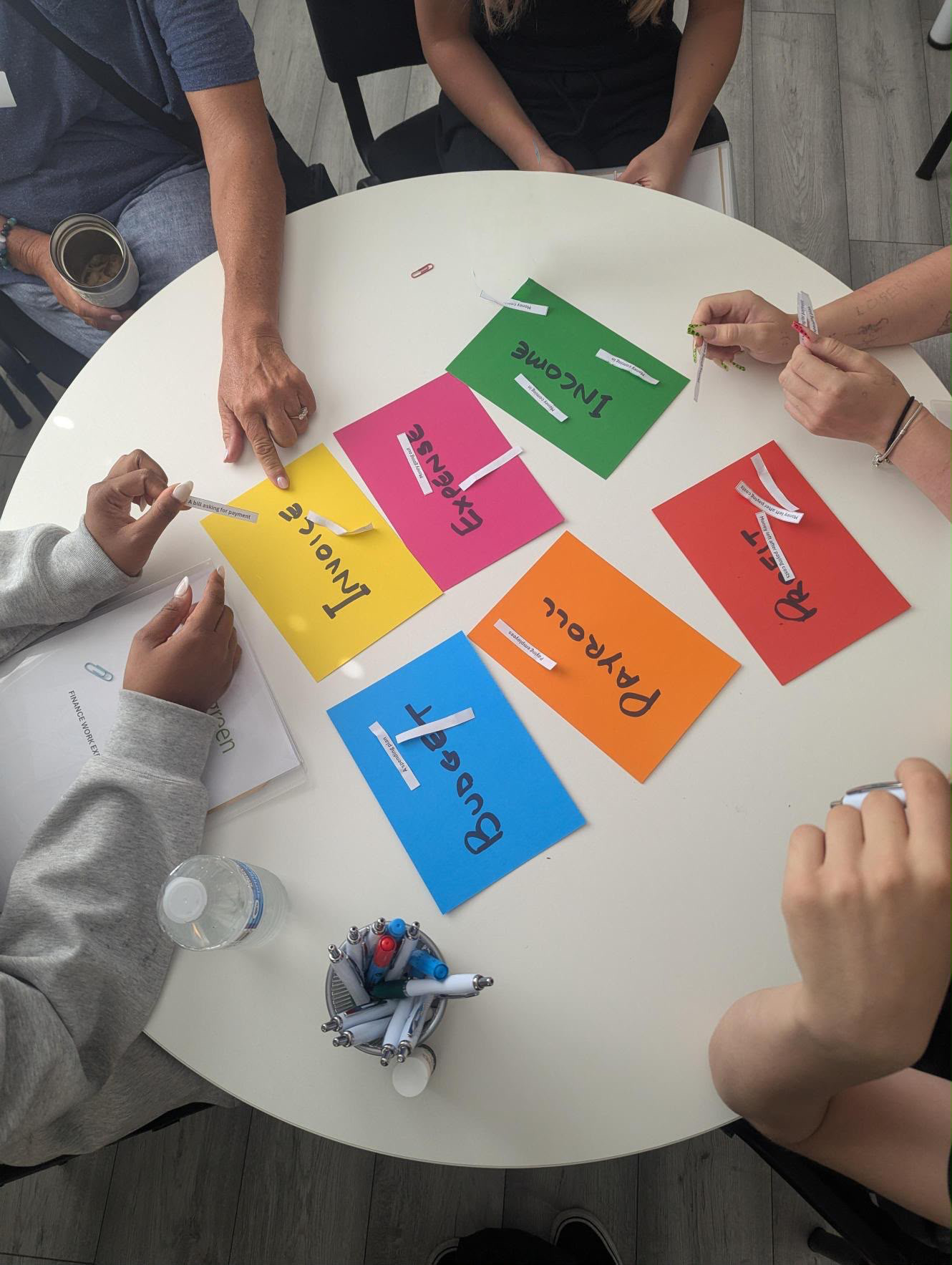
Wednesday is the fixed point of the summer week. Young people spend the day on work experience with our own teams, in finance, in recruitment and HR, in learning and development and in quality assurance. Real tasks, alongside people who do them for a living, and a weekday in August that has something in it.
Work experience usually gets arranged through school, and it is one of the things a young person in care most often misses, because it depends on a settled placement and the right conversation at the right time. Running it ourselves means it happens at all. What comes out of it is not only the day, but some idea of what an office feels like, something for a CV, and someone who can say what they are like to work with.
Learning That Does Not Look Like School
Alongside the Wednesdays, our learning and development team are running sessions in the homes right through the holidays. At Hawthornes that means CV writing and interview skills. Hawthornes supports young people building the skills they need for adulthood, so it is not an abstract exercise there. A young person can come out of the summer with something written down, some practice at talking about themselves and someone who can give a reference.
Elsewhere it means nutrition and food safety. On paper that is a life skills box. In practice it is about being able to feed yourself properly and safely when you move on.
Where a young person is making sense of a diagnosis, the team build sessions around what it means for them day to day. Not a leaflet and not a meeting, but activities designed to make it land on their own terms. A diagnosis can be an explanation or it can be a label, and a lot of that comes down to how it gets talked about.
What This Says About The Job
None of this is in a job description. It is not on the rota and it does not show up in a report. It is planning, patience and a lot of small attention paid to what one young person needs on one particular day. It is one of the harder parts of the year in a children’s home, and one of the better ones. If that sounds like work you would want to do, take a look at our current vacancies.